

4 Specs to Lock When Ordering Etched Glass for Frameless Shower Doors
Shower glass etching refers to factory-made decorative or privacy finishes, either acid-etched or sandblasted, applied to shower door glass. It has nothing to do with hard water damage. Choose etched or frosted glass when you want privacy in a bathroom without closing off the light that makes a frameless shower feel open, and expect either acid etching or sandblasting to be the two production methods behind almost every option you see.
TL;DR:
- Acid etching provides a uniform, smooth satin finish, making it ideal for full-panel frost and quick, consistent production.
- Sandblasting allows for deeper textures and precise patterns or logos, but may require longer fabrication times and more maintenance.
- Fully frosted glass offers maximum privacy, while patterned or gradient frosts balance privacy with light transmission and visual openness.
- Protective coatings and sealers significantly reduce water spots and mineral buildup, simplifying cleaning and prolonging appearance.
- Confirm whether the etching occurs before or after tempering, and specify the same substrate across all panels to ensure consistency in appearance.
How etching is made: acid etching vs. sandblasting
Both methods take clear glass and give it a soft, obscured surface, but they get there in different ways, and the difference matters once you start comparing samples.
Acid etching uses a chemical process that dissolves the glass surface evenly, leaving a smooth, satin-like texture that feels almost silky to the touch. It is the method behind many factory-applied options, including Pilkington OptiShower™‘s acid-etched Opal finish, which is coated on the production line specifically for shower enclosures. Because the chemical process is uniform, acid etching tends to produce a consistent, all-over frost that reads as clean and modern.
Sandblasting works differently. Compressed air fires an abrasive medium at the glass, physically carving away the surface. That gives fabricators more control over depth, so sandblasting can create multi-level textures, sharper pattern edges, and custom artwork like logos or house numbers that acid etching struggles to reproduce with the same crispness.

Neither method changes how the glass needs to be tempered for a frameless door. Tempering happens either before or after the surface treatment depending on the fabricator’s process, so it is worth confirming which sequence your supplier uses, since that affects tolerances.
Here is how the two compare at a glance:
- Acid etching: smooth satin texture, highly uniform, well suited to full-panel frosting.
- Sandblasting: deeper texture, supports custom patterns and logos, but can feel rougher to the touch.
- Acid etching: typically faster and more consistent for standard frosted panels.
- Sandblasting: better choice when you want a design element, not just privacy.
Design and privacy options: frost, patterns, and gradients
Once you know how the finish is made, the next decision is how much of the door you want covered and in what pattern. This is where a shower door stops being purely functional and starts becoming a design feature.
A fully frosted panel gives you the most privacy and the most consistent light transmission, since the entire surface diffuses light evenly rather than in a mix of clear and obscured zones. It suits a shared family bathroom or any space where you want the shower to read as private the moment someone walks in.
Patterned or partially etched glass takes a different approach. A band of frost across the middle, a gradient that fades from clear at the top to frosted at the bottom, or a subtle textured strip can provide privacy exactly where it is needed, in an en suite off a bedroom, for example, while keeping the rest of the door clear for light and visual openness.
Some fabricators can also etch custom logos, monograms, or patterns that match glass elsewhere in the home, which is a popular request for design-focused renovations. A few practical ways homeowners mix these options:
- Full frost: best for maximum privacy in shared or high-traffic bathrooms.
- Banded or gradient frost: balances privacy with an open, airy feel.
- Custom pattern or logo: adds a personal design touch, though it usually means a longer production timeline.
Mixing clear and etched panels in the same enclosure is a simple way to keep a shower feeling spacious while still handling the one spot where privacy actually matters.
Pros, cons, coatings, and keeping etched glass clean
Etched and frosted glass earns its popularity for good reason. It hides water spots and small soap residue better than clear glass, gives you privacy without curtains or frosted film, and comes in enough finish options to match almost any bathroom style. That said, it is worth going in with realistic expectations about upkeep.
The textured surface that makes etched glass attractive is also what makes it slightly more work to clean than a smooth, coated pane. Soap scum and mineral deposits can settle into the microscopic texture left by acid etching or sandblasting, and a squeegee that works perfectly on clear glass will not glide across a frosted surface the same way.
Coatings help close that gap. According to GlassAdvisor, protective treatments such as ShowerGuard and EnduroShield reduce water spotting and make cleaning easier regardless of whether the glass is clear or frosted. Fabricators also apply dedicated sandblast sealers, including Clearshield Sandblast Protect, specifically to protect sandblasted or etched surfaces and extend their durability, according to Creative Sliding Doors.
A simple cleaning routine keeps etched glass looking good for years:
- Rinse the glass after each shower to keep soap and minerals from settling into the texture.
- Wipe with a soft microfiber cloth and a mild, non-abrasive glass cleaner.
- Avoid scrub brushes, steel wool, and harsh acidic or alkaline chemicals, which can wear down the etched surface over time.
- Reapply a sealer periodically if your fabricator recommends one for long-term protection.
Pro Tip: Ask your fabricator whether the etched side can face outward, since some designs put the smooth, unetched surface toward the shower interior for easier squeegeeing.
Ordering and specifying an etched frameless shower door
Ordering a custom frameless door with an etched finish is more specific than picking a stock panel, so it pays to get the details right the first time. A few key specs determine both fit and finish quality.
Start with dimensions, glass thickness, and whether the panel needs to be tempered, which it should be for any frameless shower application. Decide whether you want a standard clear substrate or a low-iron option: fabricators and specifiers often recommend low-iron glass for patterned or etched panels because it avoids the green tint that shows at the edges of standard glass and keeps the pattern looking crisp, according to FGD Glass.
Also specify which surface gets etched, since one fabricator noted that placing the texture on the exterior side while leaving the interior smooth can make daily squeegeeing easier, per Sanssoucie. If you want a custom pattern or logo, request a sample and confirm the artwork file format early, since custom work takes longer than a stock frost.
- Confirm dimensions, thickness, and tempering requirements before finalizing your order.
- Specify low-iron glass if pattern clarity matters to you.
- Request a physical sample of the etch or pattern before committing to a full order.
- Ask whether a protective coating or sealer is included or available as an add-on.
| Spec item | Why it matters |
|---|---|
| Thickness and tempering | Determines strength and safety for a frameless install |
| Substrate (standard vs. low-iron) | Affects clarity and edge tint on patterned glass |
| Etched surface side | Impacts cleaning ease and pattern appearance |
| Coating or sealer | Reduces water spotting and simplifies maintenance |
Stock patterns generally ship faster than custom artwork, which needs extra fabrication and quality control time, so build that into your renovation schedule.
Common mistakes to avoid when specifying etched glass
A few recurring mistakes can turn a good design idea into a frustrating install. The most common is ordering etched glass without confirming whether the etching happens before or after tempering. Getting that sequence wrong, or not confirming it with your fabricator, can affect tolerances and, in rare cases, the strength of the finished panel.
Another frequent misstep is skipping the sample stage. Photos of etched or frosted finishes can look dramatically different from the physical glass once it is under bathroom lighting, so ordering a full panel without seeing a sample first is a gamble you do not need to take.
Homeowners also sometimes choose a heavily textured sandblasted pattern without considering maintenance, then find the deeper texture holds more soap residue than they expected. Matching the finish to your cleaning habits matters as much as matching it to your design.
Finally, avoid mismatched substrates on a multi-panel enclosure. Mixing a standard-glass panel with a low-iron panel side by side can create a visible tint difference once frosted, since low-iron glass reads noticeably clearer and whiter than standard glass. Specify the same substrate across every panel in a single enclosure to keep the finish consistent.
How long etched glass finishes last in everyday use
Etched and frosted finishes are permanent changes to the glass surface, not a film or coating that can peel or wear off, so the frost itself will not fade with normal shower use. What can change over time is how the surface looks and feels if it is not cleaned or sealed properly.
Mineral buildup from hard water and soap residue can accumulate in the texture of an unsealed or poorly maintained etched panel, making the frost look dingier over the years even though the underlying glass finish has not actually changed. That is one reason fabricators recommend sealers like Clearshield Sandblast Protect for sandblasted surfaces, since they help the texture resist buildup and stay easier to wipe clean over the long run, according to Creative Sliding Doors.
With a reasonable cleaning routine and, where recommended, a periodic sealer reapplication, an etched or frosted shower panel should hold its appearance for the practical lifespan of a frameless shower door, which is typically as long as any other tempered glass panel in the bathroom. The frost pattern itself does not degrade with age or normal water exposure the way an applied coating might.
What etching means for your shower glass warranty
Warranty terms for frameless shower glass generally cover manufacturing defects such as improper tempering, chips, or seal failures, not the cosmetic performance of an etched or frosted finish over time. It helps to read the fine print before assuming an etched panel carries identical protection to a clear one.
Some factory-applied products, like Pilkington’s acid-etched OptiShower Opal, are engineered specifically for shower use and designed to work with the line’s limescale-resistant properties, according to Pilkington. Custom sandblasted work done after the glass leaves the original manufacturer, by contrast, may fall under the fabricator’s own warranty terms rather than the base glass manufacturer’s, since a secondary process was applied.
Ask directly whether a custom etch or pattern is covered under the same warranty as the glass itself, or whether it is treated as an aftermarket modification. That distinction affects what happens if the finish looks uneven or the sealer wears prematurely, and it is worth having in writing before you place a custom order.
Safety and environmental considerations for glass etching
Commissioning etched glass is straightforward for most homeowners, since the etching itself happens at the factory or fabrication shop, not in your bathroom. Still, a few practical points are worth knowing if you are working with a contractor or comparing fabricators.
Acid etching involves hazardous chemicals that require proper ventilation, protective equipment, and disposal procedures, which is exactly why this work is done in controlled industrial settings rather than on site. Sandblasting produces fine glass and abrasive dust that also requires containment and respiratory protection during fabrication. Neither process is something a homeowner or general contractor should attempt without professional equipment and training.
Once installed, etched shower glass poses no ongoing safety or environmental concern in daily use. The main thing to watch for is cleaning chemicals: harsh acidic or alkaline cleaners can degrade some sealers and finishes over time, so sticking with mild, glass-safe products protects both the finish and your indoor air quality. If you are having custom etching done through a local glass shop rather than a factory product, ask where the etching takes place and confirm they follow standard industrial safety practices.
What I’ve learned helping homeowners choose shower glass
Every homeowner and contractor who calls about etched glass is really weighing the same four things: privacy, light, maintenance, and cost, usually in that order of urgency. Contractors tend to ask about lead times and consistency across multiple units, while homeowners lean toward asking what the glass will actually look like once it is wet and steamed up.

The honest answer is that no single finish wins on every measure. A full frost gives you the most privacy but asks a little more of your cleaning routine. A clear panel with a coating is the easiest to maintain but offers no privacy at all. Most people end up somewhere in between, and that is fine.
Our online builder and homeowner guides exist to make that middle ground easier to find, whether that means comparing finish samples before committing or reading through maintenance tips before your door even arrives.
— Scott
Getting an etched or frosted frameless shower door from Glass Shower Direct
Once you know which finish fits your bathroom, ordering it should not feel like its own project. Custom frameless doors and panels can be shipped directly from the factory, removing intermediary costs, and online design tools allow configuration of dimensions, hardware, and glass finish before ordering.
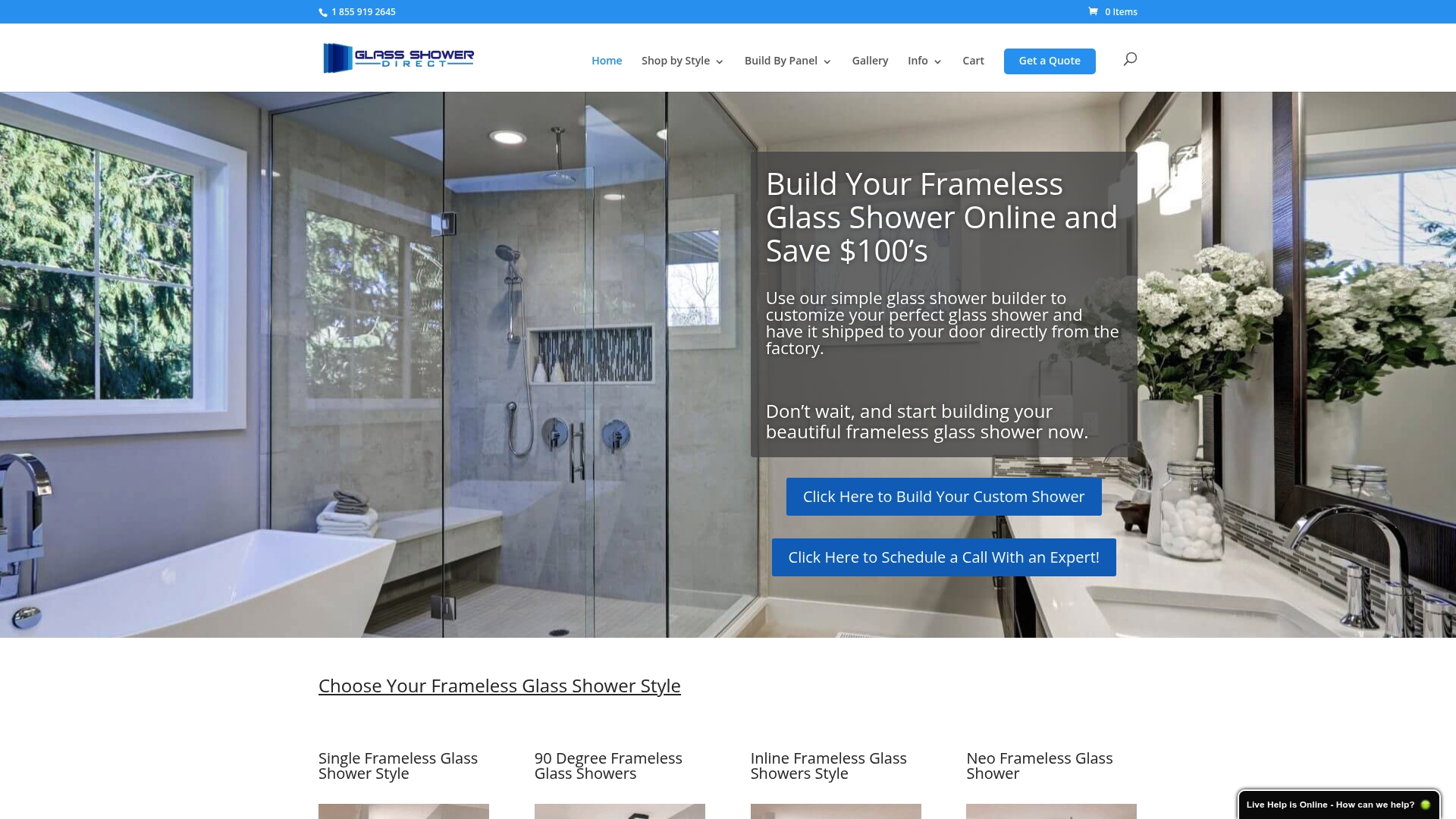
Whether you want a fully frosted single panel, a 90-degree enclosure with a banded frost detail, or a custom pattern to match another glass feature in your home, the same builder handles the specification for you:
- Configure your exact dimensions and layout using the online design tool.
- Choose from our single panel or full enclosure options depending on your shower layout.
- Add an easy-clean coating at checkout to cut down on the maintenance etched glass can require.
- Reach out directly if you are working on a custom logo or pattern request.
Start your configuration on our product pages whenever you are ready to see pricing for your specific dimensions.
Where to find more technical specs and care instructions
For deeper technical detail beyond this guide, these primary sources cover manufacturer specifications and fabricator care instructions in full.
- Pilkington OptiShower™ product specifications
- GlassAdvisor’s shower door glass options guide
- HHG Glass cleaning instructions for etched shower doors
Sources
- Pilkington OptiShower™ product page
- Shower Door Glass Options: Clear, Frosted, Rain & Patterned | GlassAdvisor
- How To Clean Etched Glass Shower Doors – HHG Glass
- Patterned Glass: The 2026 Architect’s Reference For Commercial Specification
FAQ
Does frosted shower glass actually block visibility?
Yes, frosted or etched glass diffuses light rather than transmitting a clear image, which effectively obscures visibility while still letting light through. Full, uniform frosting provides the strongest privacy, while banded or gradient patterns offer partial coverage, according to GlassAdvisor.
Can tempered glass be etched for shower doors?
Yes, tempered glass is regularly etched or sandblasted for shower applications, though the sequence matters. Some fabricators etch before tempering and others after, so it is worth confirming your supplier’s process to make sure tolerances and strength are not affected.
How often should I clean etched shower glass?
Rinsing after each use and wiping with a mild cleaner and microfiber cloth once or twice a week keeps etched glass from building up soap scum and mineral deposits. Fabricators also recommend avoiding abrasive tools and harsh chemicals, which can wear down the textured surface over time, per HHG Glass.
Is etched glass harder to keep clean than clear glass?
Etched and sandblasted surfaces do tend to hold soap residue and minerals more than a smooth, coated clear panel, simply because of the texture involved. A factory coating or a fabricator-applied sealer, such as those noted by Creative Sliding Doors, narrows that gap considerably.
Can I order a custom pattern or logo etched into my shower door?
Yes, custom patterns and logos are possible, most often through sandblasting because it allows finer control over depth and detail than acid etching. Custom artwork typically takes longer to produce than a stock frosted finish, so it helps to plan for extra lead time when specifying your order.
