
Repair minor issues like leaking seals and loose hardware. Replace when the glass is cracked, shattered, or when fixing it would cost more than half the price of a new door. That’s the 50% rule, and it’s the single most useful filter for deciding what to do next.
A quick reality check on the numbers: most minor repairs run $50 to $300, while a full frameless replacement typically lands between $900 and $3,500, with a national average near $1,800. If your repair estimate creeps past $900, you’re often better off starting fresh.
- Repair if: seals leak, hardware is loose, or you have a minor chip that isn’t structural.
- Replace if: glass is cracked or shattered, leaks persist after resealing, or hardware is corroded beyond adjustment.
- When in doubt: bring the checklist below to your installer and ask them to walk through it with you.
Key Takeaways
Repair when the cost stays under half the price of a new door and the glass is intact; replace immediately when glass is cracked or shattered.
| Point | Details |
|---|---|
| Apply the 50% rule | If repair costs exceed half the price of a comparable new door, replace instead of repair. |
| Know your repair range | Minor fixes like seals and hardware typically cost $50 to $300. |
| Treat cracked glass as urgent | Shattered or heavily cracked tempered glass needs immediate replacement, not a patch job. |
| Budget realistically for replacement | Standard frameless projects run $900 to $3,500, with DIY kits starting around $400. |
| Consider Glass Shower Direct for replacement | Its online configurator and factory-direct shipping cut out markup while including measurement support and warranty coverage. |
Frameless Shower Door Replacement vs. Repair: When Does Each Make Sense?
Not every problem with a frameless shower door means you need a new one. Plenty of issues are cosmetic annoyances or minor mechanical fixes that a handy homeowner or a quick service call can solve for less than a dinner out.
Repairable problems typically include:
- Leaking seals or worn door sweeps that let water escape onto the bathroom floor
- Stuck rollers or tracks on semi-frameless sliding doors
- Loose hinges, clamps, or U-channels that cause wobble
- Minor edge chips that haven’t spread or compromised the glass’s structural integrity
Most of these fixes fall in the $50 to $300 range, covering parts and an hour or two of labor. Hardware swaps (new hinges, rollers, or sweeps) sit at the lower end; anything requiring a technician to re-caulk and pressure-test the enclosure runs closer to the top.
Here’s where the 50% rule earns its keep: if a repair quote comes in above half of what a comparable new door would cost, you’re throwing good money at an aging system. A $700 repair on a door that would cost $1,400 to replace isn’t a bargain. It’s a stall tactic.
Pro Tip: Before calling anyone, do three checks yourself: run your fingers along the glass edges for chips, swing or slide the door to feel for drag or wobble, and run the shower for five minutes to watch where water actually escapes. Photograph anything odd. It saves the installer time and saves you money on the diagnostic visit.
When Replacement Beats Repair Every Time
Some damage doesn’t leave room for debate. Cracked or shattered tempered glass tops that list. Tempered glass doesn’t chip like a window. It’s engineered to shatter into small, rounded pieces when it fails, and once that structural integrity is compromised, patching it isn’t an option. A shattered or heavily cracked frameless panel is a genuine safety hazard that needs full replacement, not a temporary fix.
Other clear replacement triggers:
- Cracked or shattered glass (non-negotiable, safety first)
- Progressive edge chips that keep growing
- Leaks that return even after fresh sealant and hardware adjustments
- Corroded, pitted, or discontinued hardware you can no longer match
- Frequent sticking or misalignment that no amount of adjustment fixes
- Safety concerns if you have young children or aging family members using the shower
Replacement costs vary by route. A DIY kit runs roughly $400 to $648, while professional installation typically falls between $500 and $1,000 for labor alone, with total project costs (glass, hardware, and install) commonly landing between $900 and $3,500. Expect a full replacement timeline of one to two weeks from measurement to final install.
Shattered glass isn’t a maintenance problem. It’s a hazard that also happens to be letting water into your subfloor every time someone showers.
If replacement is where you land, Glass Shower Direct lets you configure a custom frameless door online with your exact dimensions, glass thickness, and hardware finish, then ships it factory-direct so you skip the markup a middleman adds. New doors also come with manufacturer warranties and hardware you can actually source again in five years, something aging or discontinued frameless systems often can’t offer.
What Should You Check Before Deciding?
Walk through this list before you pick up the phone. It takes ten minutes and gives your installer a real starting point instead of a vague “it’s leaking somewhere.”
- Inspect the glass edges and corners for chips, spider cracks, or cloudy stress marks.
- Test the door swing or slide for drag, wobble, or grinding at the hinges or rollers.
- Check hardware condition, including hinges, clamps, handles, and sweeps, for rust or pitting.
- Note leak history, specifically whether water escapes in the same spot repeatedly after previous fixes.
- Review your warranty status, since some manufacturer warranties cover hardware replacement even after the install warranty expires.
When you call an installer, ask these questions directly: Can I get an itemized quote separating glass, hardware, and labor? What glass thickness are you quoting, 1/4", 3/8", or 1/2"? What’s the warranty on parts and labor? What’s your lead time? Do you run a water test after installation, and will you show me the results?
The decision rule stays simple: if repair costs exceed half the price of a new door, replace it. If the glass is cracked or shattered, replace it regardless of cost. Everything else is a judgment call based on age, aesthetics, and how much longer you want this door in your bathroom.
Is DIY Repair Realistic, or Should You Hire a Pro?
Frameless glass isn’t like patching drywall. A single door panel can weigh around 85 pounds, and it has to sit dead level against tile that’s rarely perfectly plumb. That combination of weight and precision is exactly where DIY projects go sideways.
DIY makes sense for:
- Swapping a worn door sweep or replacing a single hinge
- Basic re-caulking around an existing frame
- Cleaning mineral buildup off tracks or rollers
Hiring a pro makes more sense for:
- Any job involving glass removal, replacement, or resizing
- New installs where precise measurement determines whether the door seals properly
- Anything that affects your warranty, since many manufacturers void coverage on self-installed hardware
A door that’s off by even an eighth of an inch at the top can leak for years before anyone traces it back to the original install.
Pro Tip: If you do attempt any DIY work involving the glass panel itself, never lift it alone. Get a second person and confirm your wall anchors can handle the weight before you drill a single hole.
How Long Does Replacement Actually Take?
Homeowners usually underestimate how much of the timeline is waiting on fabrication, not installation itself.
- Measurement and quote — Same-day or next-day, whether an installer visits in person or you submit dimensions through an online configurator.
- Fabrication lead time — Roughly 3 to 10 business days depending on glass thickness, coatings, and hardware finish.
- Delivery and installation — 2 to 6 hours for a standard single-door job once the glass arrives.
- Sealing and water test — Installers should run water across every seam and photograph measurement points to confirm coverage before calling the job done.
- Follow-up warranty check — Confirm what’s covered if a seal fails or hardware loosens in the first year.
Ask upfront whether your installer photographs the measurement and runs a documented water test. Both are becoming standard practice, and skipping them is a red flag worth noting.
What Do Frameless Shower Doors Actually Cost?
Budgeting gets easier once you know where the money actually goes. On a typical frameless panel, glass makes up 50% to 70% of the total cost, hardware runs 15% to 25%, and labor takes the remaining 15% to 25%.

| Line Item | Typical Cost Range |
|---|---|
| Standard 3/8" tempered glass panel | Included in base door price |
| Upgrade to 1/2" glass | +$300 to $700 per panel |
| Low-iron (ultra-clear) glass | +$150 to $400 |
| Easy-clean protective coating | +$100 to $300 |
| Professional installation labor | $500 to $1,000 |
| Full standard project (glass + hardware + labor) | $900 to $3,500 |
Costs shift by region and by how customized your enclosure is. If you get a quote that doesn’t break down glass, hardware, and labor separately, ask for one. It’s the fastest way to spot whether you’re paying a fair price or covering someone else’s overhead.
Does Repairing or Replacing Cost the Environment Anything?
Repair is almost always the lower-impact choice when it’s genuinely viable. Fixing a seal or swapping a hinge keeps an existing glass panel in service and avoids the energy cost of manufacturing new tempered glass, which requires heating to roughly 1,148°F before rapid cooling locks in its strength.
That said, sustainability isn’t only about avoiding a purchase. A door that leaks chronically wastes water and can drive mold growth in wall cavities, which eventually means tearing out drywall or subfloor, a far bigger environmental cost than a new glass panel. When replacement is genuinely warranted, ask whether your installer recycles the old glass. Tempered glass can’t go in curbside recycling in most areas because of how it shatters, but many glass fabricators and specialty recyclers accept it.
Choosing standard glass thickness over premium upgrades also trims your footprint slightly, since thicker 1/2" panels and low-iron glass require more raw material and energy to produce than standard 3/8" options. If sustainability matters to you, a well-fitted standard-thickness door that lasts 15 to 20 years beats a premium door replaced early because of a bad install.
What Happens if You Delay Replacing Damaged Glass?
Waiting on a cracked door isn’t a neutral decision. It’s a decision with rising risk attached. Tempered glass with a spreading crack or chip can fail suddenly under thermal stress, like a hot shower hitting cold glass on a winter morning, and when it fails, it does so all at once.

The injury risk is real, particularly in households with kids, older adults, or anyone with limited mobility who might brace against the door while entering or exiting the shower. Beyond the glass itself, a compromised door that no longer seals properly lets water migrate behind tile and into subfloor, where it can sit unnoticed for months, feeding mold growth and eventually requiring structural repair far more expensive than the door itself.
There’s also a liability angle homeowners rarely think about. If you’re renting out a property, or if you sell your home and a buyer’s inspection flags visible glass damage, an unresolved crack can complicate a sale or expose you to a claim if someone gets hurt using a door you knew was compromised. Insurance adjusters take a dim view of “known and ignored” hazards.
The takeaway is straightforward: once you see a crack, chip that’s growing, or glass that looks cloudy from stress, treat it as a timeline, not a maybe. Get a replacement quote within days, not months. Cracked glass rarely improves on its own, and the cost of delay is measured in more than dollars.
How Do You Pick a Trustworthy Installer?
The best signal of a competent installer is how they talk about measurement, not how fast they promise to show up. Ask for an itemized quote that separates glass, hardware, and labor. If someone gives you a single lump number with no breakdown, that’s your first red flag.
Ask what glass thickness they’re quoting, whether it’s 1/4", 3/8", or 1/2" tempered glass, since thickness affects both price and durability. Ask about warranty terms in writing, not verbally, and confirm whether it covers just the glass or also the hardware and labor. A legitimate installer should also be willing to describe their post-install water test process without hesitation. This is standard practice among installers who stand behind their work.
Watch for these red flags:
- No physical address or a phone number that only takes voicemail
- Reluctance to put warranty terms in writing
- Quotes that seem far below the $900 to $3,500 typical range with no explanation
- No mention of measurement documentation or photos
A quick way to sanity-check any quote against realistic industry ranges is comparing it to a general cost breakdown for glass shower doors, which shows how framed and frameless pricing diverge based on materials and labor. If you’re also weighing broader bathroom door decisions, resources on interior bathroom door choices can help you think through the whole space, not just the shower enclosure.
What Installers Actually Notice on the Job
Precision measurement separates a door that lasts fifteen years from one that leaks within six months. Fitters who photograph every measurement point and cross-check plumb lines before fabrication catch the misalignments that cause callbacks later.
Homeowners most often regret waiting on cracked glass, not spending too much on replacement. A door replaced promptly after damage tends to preserve resale value and eliminate the safety question entirely, while repairs on aging hardware just delay an inevitable replacement. When budget is tight and the damage is truly minor, repair still makes sense. When safety is on the table, it rarely does.
If You Choose Replacement, Here’s a Direct Option Worth Considering
If your inspection points toward replacement, Glass Shower Direct removes the usual middleman markup by letting you design your door online and ship it straight from the factory to your door. You pick the layout, whether that’s a single panel, inline, sliding, or neo angle configuration, plus glass thickness, hardware finish, and optional easy-clean coatings that cut down on the wipe-down time you’d otherwise spend fighting soap scum.
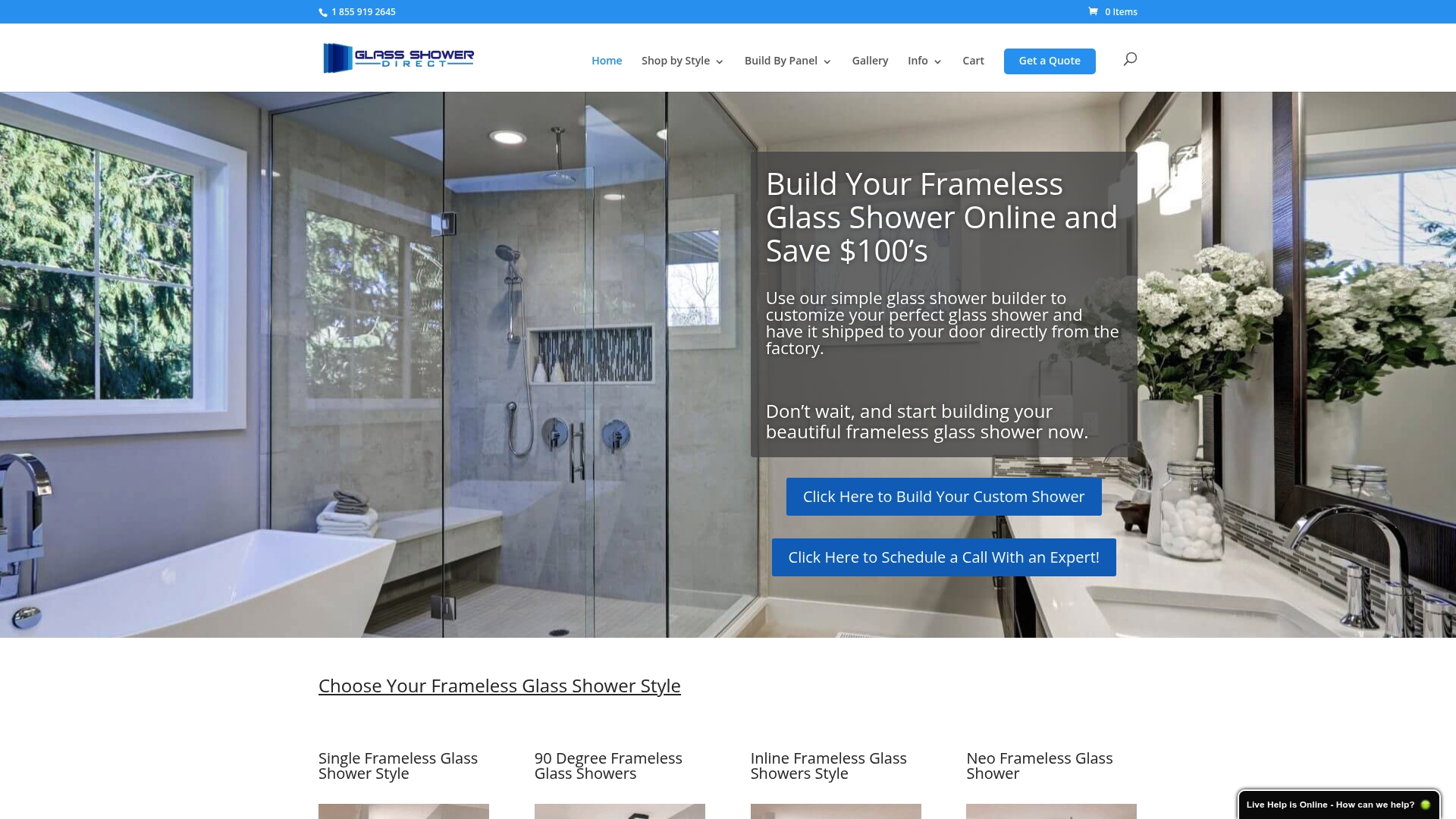
Every custom order comes with measurement support to make sure your dimensions are accurate before fabrication starts, which is the single biggest factor in avoiding the leaks and misalignment that lead to premature repairs. If you’re doing the install yourself, the step-by-step installation video walks through anchoring, leveling, and sealing so your water test actually passes the first time. Manufacturer warranties back the glass and hardware, and because everything ships direct, you’re not paying for a showroom or a sales team’s commission.
Ready to see what a replacement would actually cost for your bathroom? Start with the single panel configurator or explore custom frameless door options to get a real quote based on your exact measurements.
Frequently Asked Questions
Is it cheaper to repair or replace a frameless shower door?
Repair is cheaper upfront for minor issues like seals or hardware, typically $50 to $300. Replacement costs more initially but avoids repeat repair bills once you’re past the 50% cost threshold relative to a new door.
Can a cracked frameless shower door be repaired instead of replaced?
No. Tempered glass with a crack or chip that’s spread is structurally compromised and needs full replacement for safety, not a repair.
How much does a frameless shower door replacement cost?
Most standard projects run $900 to $3,500, with a national average near $1,800, depending on glass thickness, hardware finish, and coatings.
How long does it take to replace a frameless shower door?
Expect roughly one to two weeks total: same-day measurement, 3 to 10 business days for fabrication, and 2 to 6 hours for installation.
Can I install a frameless shower door myself?
Small repairs like hardware swaps are DIY-friendly. Full glass installation is riskier given the roughly 85-pound weight of a single panel and the precision required for a proper seal.
Sources
- How To Install a Shower Door – This Old House
- Frameless Shower Door Cost: Price Range, Components, and How to Save 2026 – Current Cost